TL;DR
Bathroom tile options span dozens of materials, formats, finishes, and technical ratings that determine whether a tile belongs on your shower floor or your dry accent wall. This glossary breaks down every term you’ll encounter, from porcelain and PEI ratings to DCOF thresholds and grout types, so you can spec correctly, communicate with your installer, and avoid expensive mistakes. Bookmark it before your next bathroom remodel.
Choosing tile for a bathroom is one of those decisions that looks simple until you start shopping. Walk into any tile showroom and you’re facing walls of samples with spec sheets full of abbreviations. PEI 3. DCOF 0.42. Vitreous. Semi-vitreous. Running bond. Bullnose. The terminology matters because the wrong choice in the wrong spot leads to cracked grout, slippery floors, or a full tear-out within a few years.
This glossary exists to translate all of it into plain language. Whether you’re a homeowner planning a bathroom remodel or a contractor specifying materials for a client, every term below answers two questions: what does this mean, and why should I care?
If you’re tackling a full bathroom renovation, pair this reference with a bathroom remodel checklist to keep your project organized by phase.
What Are the Best Bathroom Tile Options?
The best bathroom tile depends on where you plan to install it. Porcelain tile is a versatile choice for bathroom floors and shower walls because it has low water absorption and is available in many finishes and styles. Small-format porcelain or other suitably rated mosaics are often practical for shower floors because their grout joints can help with traction and allow the tile to follow the shower slope. Ceramic tile is a popular option for bathroom walls, while natural stone, glass, and decorative tiles work well for feature walls and accents when their specifications suit the application.
Before buying, check the manufacturer’s recommendations for the intended location, water absorption, slip resistance where relevant, tile thickness, and installation requirements. In showers, a properly designed waterproofing system is just as important as choosing the right tile.
Bathroom Tile Options at a Glance
Tile Type | Best Uses | Main Advantages | Main Limitations |
|---|---|---|---|
Porcelain | Bathroom floors, shower walls, and suitable shower floors | Low water absorption, durable, many styles | Harder to cut; installation can be more demanding |
Ceramic | Bathroom walls, backsplashes, and rated floor applications | Affordable, versatile, easy to cut | Suitability depends on the specific tile’s rating |
Natural stone | Feature walls, floors, and selected shower applications | Unique patterns and natural appearance | May require sealing and specialized maintenance |
Glass | Shower accents, niches, and backsplashes | Reflective, stain-resistant, available in many colors | Installation can be demanding; floor use requires an appropriately rated product |
Mosaic | Shower floors, niches, and decorative details | Follows slopes and curved surfaces; many grout joints | More grout to clean and maintain |
Cement | Decorative floors and feature walls | Distinctive patterns and rich colors | Porous; requires suitable sealing and maintenance |
Zellige | Feature walls, backsplashes, and shower walls when properly specified | Handmade appearance and surface variation | Uneven surfaces, variation, and installation complexity |
Terracotta | Dry interior floors and selected decorative applications | Warm, earthy appearance | Highly porous and maintenance-intensive |
Quick recommendation: For a practical, low-maintenance bathroom, start by comparing porcelain options. For walls, ceramic is another versatile choice. Choose natural stone and decorative tiles when their maintenance requirements and product specifications fit your project.
Tile Materials
Porcelain Tile
Porcelain is made from refined clay fired at extremely high temperatures, often reaching nearly 2,500°F. That process creates a dense, hard body that absorbs less than 0.5% of water, making it virtually waterproof. For showers and bathroom floors, porcelain outperforms ceramic because of that lower water absorption and higher durability.
Best bathroom use: Shower floors, shower walls, bathroom floors, anywhere moisture is constant.
Key limitation: The density that makes porcelain great also makes it harder to cut. You’ll typically need a wet saw with a diamond blade, and many homeowners opt for professional installation. Porcelain tile generally runs $4 to $12 per square foot for materials alone.
Ceramic Tile
Ceramic tiles are fired at lower temperatures than porcelain, resulting in a lighter, more porous body. They’re easier to cut and install, which makes them popular for DIY projects. The trade-off is that ceramic is more absorbent and less durable under heavy foot traffic.
Best bathroom use: Bathroom walls, vanity backsplashes, and low-traffic bathroom floors.
Key limitation: Ceramic tiles vary in water absorption, strength, and intended application. Do not assume that every ceramic tile is suitable for a shower floor or other demanding wet area. Check the manufacturer’s technical specifications and installation recommendations. For many bathroom projects, porcelain is a practical alternative because it has a water absorption rate of 0.5% or less.
Natural Stone (Marble, Slate, Travertine, Limestone)
Natural stone offers a look that manufactured tile can’t replicate. Each piece has unique veining, texture, and color variation. When properly sealed and maintained, stone tile can last for decades.
Best bathroom use: Feature walls, vanity surrounds, bathroom floors in low-moisture areas. Marble is especially popular for creating a high-end feel.
Key limitation: Most natural stone is porous. In bathrooms, that means regular sealing is non-negotiable. While dry interior spaces might need resealing every 3 to 5 years, bathrooms and shower areas typically need resealing every 6 to 12 months because of the constant humidity. You also need pH-neutral cleaners; acidic products like vinegar will etch the surface. Materials run $8 to $25 per square foot, with marble reaching $10 to $30.
Glass Tile
Glass tiles are non-porous, stain-resistant, and reflect light beautifully. They come in a huge range of colors and can make a small bathroom feel more open.
Best bathroom use: Backsplashes, accent strips, shower wall accents. Mosaic-format glass works on shower floors because the extra grout lines add traction.
Key limitation: Too fragile for standard floor use. Glass cracks under impact and doesn’t handle point loads well, so it’s strictly a wall and accent material unless used in small mosaic format.
Mosaic Tile
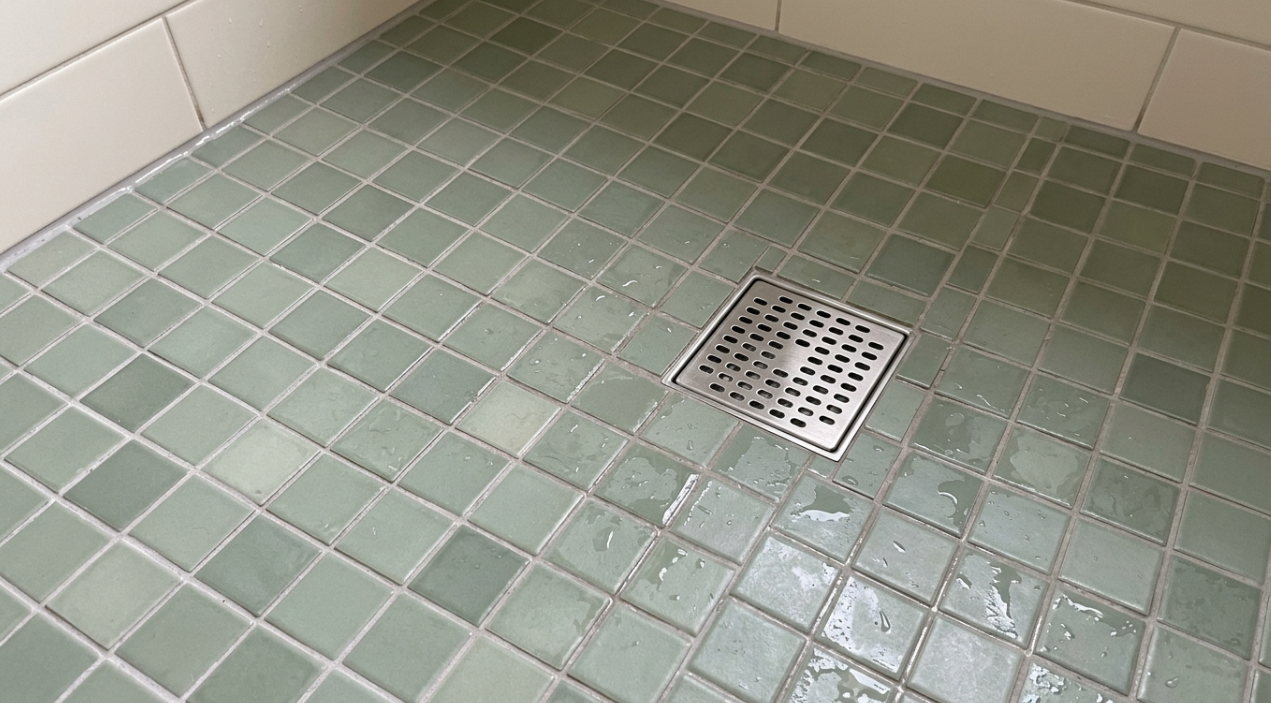
Mosaic tiles are small tiles (typically 1×1 to 4×4 inches) mounted on mesh sheets for easier installation. They come in ceramic, porcelain, glass, and natural stone. The defining feature is the abundance of grout lines, which serve double duty as design detail and slip resistance.
Best bathroom use: Shower floors (the grout lines provide critical traction), shower niches, accent bands, and decorative feature areas.
Key limitation: More grout means more maintenance. Grout is the weakest link in any tile installation, and small mosaic formats maximize the surface area that needs cleaning and occasional resealing.
Cement Tile
Cement tile is a cured sand-and-mortar mix, not kiln-fired like ceramic or porcelain. It’s classified as non-vitreous, meaning it absorbs water readily. What draws people to cement tile is the bold, graphic patterns and rich pigmentation that goes all the way through the body.
Best bathroom use: Bathroom floors (away from direct water exposure), feature walls, powder rooms.
Key limitation: Must be sealed before use and resealed periodically. Avoid acidic cleaners. Materials cost $10 to $30 per square foot, putting cement tile in the premium category.
Zellige Tile
Zellige is a handmade Moroccan tile with a distinctive, slightly irregular glaze. No two pieces are identical, which creates a textured, artisanal surface with a lot of visual depth. The imperfections are the point.
Best bathroom use: Shower walls, feature walls, vanity backsplashes. The handmade variation looks best on vertical surfaces where light catches the uneven glaze.
Key limitation: Zellige is more expensive than standard ceramic or porcelain, and the irregular surface makes grouting trickier. The uneven edges mean wider grout joints, which changes the overall look.
Terracotta Tile
Terracotta is an unglazed, kiln-fired clay tile with a warm, earthy tone. It’s been used in Mediterranean and Spanish-style architecture for centuries.
Best bathroom use: Bathroom floors in dry or low-moisture areas, powder rooms.
Key limitation: Terracotta is highly porous and absorbs water quickly. It requires thorough sealing for any bathroom application and is not suitable for shower enclosures without significant waterproofing effort.
Tile Formats and Sizes
Subway Tile
Subway tiles are rectangular, traditionally 3×6 inches, though modern variations include 2×8, 4×12, and larger. Originally designed for New York City subway stations in the early 1900s, the format has become a staple for backsplashes and shower walls. It works with nearly every layout pattern and never goes out of style.
Large-Format Tile
Any tile with at least one side measuring 15 inches or longer. Popular bathroom sizes include 24×24 and 24×48. Fewer grout lines mean a cleaner, more seamless look and easier maintenance, since there are fewer crevices where dirt and water accumulate. The trade-off: large-format tile demands a perfectly level substrate and careful installation to avoid lippage (more on that below).
Mosaic Format
Small tiles, usually 1×1 to 4×4 inches, pre-mounted on mesh backing sheets. The small size allows them to conform to curved surfaces like shower pans. The extra grout lines provide traction that makes mosaics the go-to choice for shower floors.
Hex Tile
Hexagonal tiles, available from small (1-inch) penny-hex to large (6-inch or 8-inch) formats. Small hex tile has a classic, vintage bathroom feel. Larger hex creates a modern geometric statement.
Penny Round
Small circular tiles, usually about 3/4-inch in diameter, mounted on mesh sheets. Like mosaics, the abundant grout lines make penny rounds a good shower floor option. They add a playful, retro texture.
Plank Tile
Rectangular tiles designed to mimic wood planks, typically 6×24 or 6×36 inches. Porcelain plank tile gives you the look of hardwood in a space where real wood would warp and rot. A strong option for bathroom floors.
If you’re considering non-tile alternatives for your bathroom floor, our comparison of SPC vs. LVP flooring covers the key differences.
How to Choose the Right Bathroom Tile Size
Tile size affects the appearance of a bathroom, the number of grout joints, and the complexity of installation. The best format depends on the surface, room layout, drainage requirements, and the look you want.
Tile Size or Format | Common Uses | What to Consider |
|---|---|---|
Small mosaics, approximately 1–2 inches | Shower floors, niches, and accents | Flexible for slopes and curves, but creates more grout joints |
Small and medium tiles, approximately 3–8 inches | Shower walls, backsplashes, and decorative floors | Versatile and suitable for many traditional patterns |
Medium and large tiles, approximately 12–24 inches | Bathroom floors and walls | Fewer grout joints, but requires an appropriately flat substrate |
Large-format tiles, including 24 × 48 inches | Shower walls and spacious floor areas | Can create a seamless appearance but may require specialized handling and installation |
Plank tiles, such as 6 × 24 inches | Wood-look bathroom floors and feature walls | Check tile flatness, layout, and the recommended installation pattern |
Are Large Tiles Better for Small Bathrooms?
Not necessarily, but they can make a small bathroom feel more continuous because they create fewer grout lines. Small tiles can also work well in compact bathrooms, especially where a shower floor needs to follow a slope.
Choose tile based on the actual dimensions of the room, drain placement, wall openings, and installation requirements. Request a layout plan before ordering if you want to minimize narrow cuts or awkward transitions.
Layout Patterns
The same tile can look completely different depending on how it’s arranged. Here are the patterns you’ll encounter most often when reviewing bathroom tile options.
Running Bond (Brick Lay)
Each row is offset by half the tile length, mimicking brickwork. This is the most common subway tile layout. It’s forgiving of slight size variations and works in almost any bathroom.
Herringbone
Tiles arranged in a zigzag, V-shaped pattern. Herringbone creates a dynamic, textured look that brings visual movement to walls and floors. It’s more labor-intensive to install than running bond, which means higher installation costs.
Stacked (Grid)
Tiles aligned in a straight grid with all grout lines running continuously in both directions. Stacked layouts create a clean, modern feel. They’re particularly popular with subway tile and large-format tile, but they expose any inconsistency in tile size.
Chevron
Similar to herringbone but with tiles cut at an angle so the ends form a clean point rather than a staggered zigzag. Chevron reads as more polished and directional than herringbone.
Basketweave
Pairs of rectangular tiles are alternated horizontally and vertically, creating a woven effect. It’s a classic pattern that works especially well in traditional and vintage-styled bathrooms.
Diagonal
Standard square tiles rotated 45 degrees. This layout makes small bathrooms feel larger because the diagonal lines draw the eye outward. It does create more waste due to the angled cuts at the edges.
Tile Finishes
Matte
A flat, non-reflective surface. Matte finishes resist fingerprints and watermarks, hide minor imperfections, and provide better slip resistance than glossy alternatives. For bathroom floors and shower walls, matte is the practical default. The 2026 trend toward textured, tactile surfaces leans heavily on matte finishes.
Glossy (Polished)
A shiny, reflective surface that bounces light and makes colors pop. Glossy tile is easier to wipe clean on walls, but it’s slippery when wet and shows every water spot and smudge. Practitioners on Reddit and design forums consistently warn that dark, glossy tile in bathrooms is a maintenance headache, since hard water spots, dust, and streaks show immediately, even right after cleaning.
Best use: Accent walls, backsplashes, and small-dose feature areas. Not recommended for floors.
Honed
A smooth surface with a matte or satin appearance, most commonly seen on natural stone. Honing removes the high-gloss polish but keeps the stone smooth to the touch. It provides better slip resistance than polished stone while still looking refined.
Textured (Fluted, Ribbed)
Tiles with three-dimensional surface patterns, like vertical fluting or wave-like ridges. Textured tiles are one of the strongest design directions in 2026, solving the problem of flat tile surfaces that can feel cold and sterile in a bathroom. The ridges also add grip, making textured porcelain a good shower wall choice.
Satin
A finish that falls between matte and glossy, offering a subtle sheen without high reflectivity. Satin finish is less slippery than gloss and shows fewer marks. It’s a solid middle-ground choice for bathroom walls.
Technical Ratings That Matter
These are the numbers that separate a tile that performs from one that fails. No amount of visual appeal matters if the tile can’t handle moisture, foot traffic, or wet bare feet.
PEI Rating (Porcelain Enamel Institute)
The PEI rating measures a glazed tile’s resistance to surface abrasion. It mimics long-term foot traffic, not appearance quality. The scale runs from 0 to 5:
PEI 0: No foot traffic. Wall use only.
PEI 1: Very light traffic (bathroom walls where foot traffic isn’t a factor).
PEI 2: Light traffic (bathroom floors with soft-soled shoes or bare feet).
PEI 3: Light to moderate traffic (most residential bathroom floors).
PEI 4: Moderate to heavy traffic (entryways, kitchen floors).
PEI 5: Heavy traffic (commercial applications).
For bathroom floors, aim for PEI 3 or higher. A higher PEI grade doesn’t inherently mean better quality; it simply indicates greater abrasion resistance for more demanding environments.
For residential bathroom floors, choose a product explicitly rated for the intended floor application and expected traffic. PEI ratings can help when comparing glazed tiles, but they do not measure slip resistance or structural strength. Some unglazed porcelain products use different evaluation criteria, so review the manufacturer’s complete technical specifications rather than selecting tile by PEI rating alone.
DCOF (Dynamic Coefficient of Friction)
Dynamic coefficient of friction (DCOF) is a measure of friction under specified testing conditions. Tile manufacturers may provide DCOF results to help buyers evaluate a product’s suitability for particular floor applications.
For interior level floors expected to be walked on when wet, ANSI A137.1 includes a commonly referenced minimum DCOF value of 0.42 under the applicable test conditions. However, this value does not guarantee that a tile will be slip-proof in every real-world situation.
Shower floors require additional consideration because they are sloped and exposed to water, soap, shampoo, and other contaminants. Do not rely on a single DCOF number to determine whether a shower-floor tile is safe. Check the manufacturer’s recommendations for the specific application and consider the tile’s texture, format, grout joints, drainage, and maintenance.
What to check before buying: Confirm that the product is recommended for the intended wet-floor application. Ask the manufacturer or tile supplier for the relevant test information rather than judging traction by touch alone.
Water Absorption Rate
The absorption rate tells you how much water a tile soaks up, expressed as a percentage of its dry weight. It’s one of the most important specs to verify before purchasing, because it determines whether a tile belongs in a shower, on a dry wall, or somewhere in between.
There are four industry classifications:
Impervious (0.5% or less): Most porcelain tile. Suitable for showers, wet areas, and exterior use.
Vitreous (0.5% to 3%): Low absorption. Good for most residential interiors, including bathroom floors.
Semi-Vitreous (3% to 7%): Moderate absorption. Standard ceramic tile often falls here. Limited to interior use.
Non-Vitreous (over 7%): High absorption. Suitable only for dry interior applications like wall tile away from moisture sources.
These classifications describe the tile body’s water absorption, not the waterproofness of the finished bathroom. Even impervious porcelain can be installed in a shower that leaks if the waterproofing membrane, joints, drain connections, or other parts of the system are defective. Always evaluate tile suitability and the waterproofing system separately.
Shade Variation (V1 to V4)
Manufactured tiles can vary in color from piece to piece, and manufacturers rate this on a V1 to V4 scale:
V1: Uniform appearance. Tiles look nearly identical.
V2: Slight variation. Differences are minimal.
V3: Moderate variation. Noticeable color differences between tiles.
V4: Substantial variation. Dramatic differences in color and pattern from tile to tile (common in wood-look and stone-look porcelain).
Higher variation ratings aren’t defects. They’re designed to mimic the natural variation found in real stone and wood. But if you want a consistent look, stick to V1 or V2.
Installation Terms
Thinset Mortar
The adhesive that bonds tile to the substrate. Thinset is a mixture of cement, fine sand, and a water-retaining agent. Modified thinset (with added polymers) is the standard for bathrooms because it provides a stronger, more flexible bond that resists moisture.
Grout
The material that fills the joints between tiles. There are three main types:
Sanded grout: Contains fine sand for strength. Used for joints wider than 1/8 inch. The standard for floor tile.
Unsanded grout: Smoother, without sand particles. Used for joints 1/8 inch or narrower, and on polished stone where sand could scratch the surface.
Epoxy grout: A two-part resin that cures to a waterproof, stain-proof finish. More expensive and harder to work with, but it never needs sealing and resists mold. Worth considering for shower floors and any area with heavy moisture exposure.
Backer Board (Cement Board)
Backer board is a stable substrate used to support tile installations. Cement backer boards are commonly used in bathrooms because they tolerate moisture better than ordinary drywall. However, a cement board should not automatically be treated as a waterproof barrier.
The appropriate substrate depends on the installation system, the location, and the manufacturer’s instructions. Shower walls and other wet areas need a compatible waterproofing approach that protects the underlying structure.
Waterproofing Membrane
A waterproofing membrane is a liquid-applied or sheet material designed to limit water penetration into the structure beneath a tiled surface. Depending on the system, it may be installed over an approved substrate or integrated into a waterproof building panel.
In showers, the waterproofing system must be designed and installed according to the applicable building requirements and product instructions. Seams, corners, niches, penetrations, and connections to the shower base need particular attention. Tile and grout alone do not create a reliable waterproof shower enclosure.
Installation tip: Use compatible components from an approved system and follow the manufacturer’s instructions for seams, overlaps, curing times, and connections to the shower pan or drain.
For an overview of non-tile shower wall alternatives, including panel systems that integrate their own waterproofing, see our shower wall panels guide.
Lippage
The height difference between the edges of two adjacent tiles. When one tile sits higher than its neighbor, you get a visible and tactile ridge. Large-format tiles are especially prone to lippage because of their size, which is why they require a perfectly level substrate and a skilled installer. Industry standards allow no more than 1/32 inch of lippage for tiles with grout joints under 1/4 inch.
Large-format tiles can make lippage more noticeable, so the substrate must be suitably flat and the installation method appropriate for the tile. Acceptable lippage depends on the applicable installation standard, tile dimensions, warpage, and grout-joint width. Check the relevant standard and manufacturer instructions rather than applying one tolerance to every tile installation.
Bullnose and Edge Trim
Bullnose is a tile with one finished, rounded edge, used where a tiled surface meets an untiled wall or the edge of a niche. Not all tile lines include matching bullnose pieces. When they don’t, metal or PVC edge trim (like Schluter profiles) provides a clean termination point.
Dye Lot (Lot Variation)
Tiles produced in different manufacturing runs can have subtle color differences, even within the same product line. This is called lot variation. Always order enough tile from the same lot to complete your project, plus 10 to 15% extra for cuts, breakage, and future repairs. If you run short and the manufacturer has moved to a new production run, the replacement tiles may not match.
Bathroom Application Zones
Different areas of a bathroom put different demands on tile. Here’s what each zone requires.
Floor Tile
Must handle foot traffic, moisture, and cleaning chemicals. Look for porcelain or glazed ceramic with a PEI rating of 3 or higher, DCOF of 0.42+, and an impervious or vitreous absorption rating. Matte or textured finishes are safer than glossy.
Wall Tile
Doesn’t need to handle foot traffic, so PEI and slip resistance are less critical. You can use lighter, thinner, and more decorative options. Glossy finishes work well on walls because they’re easy to clean and reflect light.
The rule: Floor tile can go on a wall, but wall tile cannot go on a floor. Floor tiles are designed for durability and slip resistance. Wall tiles lack those properties. One DIYer’s story, widely cited across home improvement outlets, illustrates this perfectly: she used thinner wall tile on her bathroom floor despite being warned by the tile shop. The tiles now shift and the grout is cracking, because the tile wasn’t rated for the stress and the substrate had too much flex.
Shower Floor
The most demanding zone in any bathroom. Tiles here must be impervious (under 0.5% absorption), with a DCOF of 0.60 or higher for optimal safety. Small mosaics (2×2 or smaller) are the standard because the grout lines provide the traction that prevents slipping on wet, soapy surfaces.
Shower Wall
Needs impervious or vitreous tile to resist constant water exposure. Large-format porcelain in stacked layouts is popular because fewer grout lines mean less maintenance. If you’re also selecting a shower enclosure, our guide to shower doors vs. curtains covers the practical and cost trade-offs.
Accent Wall / Feature Wall
A single wall (or portion of a wall) with a different tile material, color, or pattern to create a focal point. This is where you can use more expressive materials like zellige, textured tile, or bold patterns. Because it’s a limited area, cost and maintenance are more manageable.
Shower Niche
The built-in shelf inside a shower for soap and shampoo. Niches are typically tiled to match the shower wall or accented with a contrasting mosaic or stone. Waterproofing the niche is critical because the recessed corners and shelf are vulnerable to water intrusion.
Vanity Backsplash
The tiled area between the vanity countertop and the mirror or medicine cabinet. Glass, ceramic, or sculpted textures work well here. The area gets minimal direct water contact, so absorption ratings are less critical than on shower surfaces. For guidance on choosing the vanity itself, see our bathroom vanity guide.
Wainscot
Tile covering the lower portion of a bathroom wall, typically to chair-rail height (about 36 to 48 inches). Wainscot protects walls from splashes near the toilet, tub, and vanity. Subway tile in a running bond pattern is a classic wainscot treatment.
How to Choose the Right Bathroom Tile for Each Area
The best tile for a bathroom depends on exposure to water, foot traffic, cleaning requirements, and the look you want to achieve. Start by identifying the installation area, then narrow your choices using the manufacturer’s specifications.
Bathroom Floors
Choose tile specifically rated for floor use and appropriate for the expected traffic. Porcelain is a popular option because it combines low water absorption with a wide selection of finishes and styles. Look for a surface suitable for the bathroom’s wet conditions and verify its slip-resistance information.
Matte or textured finishes can be practical, but texture alone does not guarantee better traction. Check the product’s technical documentation before purchasing.
Shower Floors
Shower floors need tile suitable for wet, sloped surfaces. Small-format mosaics are popular because they can follow the slope toward the drain and provide more grout joints. Choose a product recommended by its manufacturer for shower-floor use and coordinate the tile with the shower pan, drain, waterproofing system, and installation method.
Shower Walls
Porcelain and ceramic tiles are both potential choices for shower walls when the products and installation system are suitable for wet areas. Large-format tile can reduce the number of grout joints, while smaller tiles make it easier to create decorative details and work around niches.
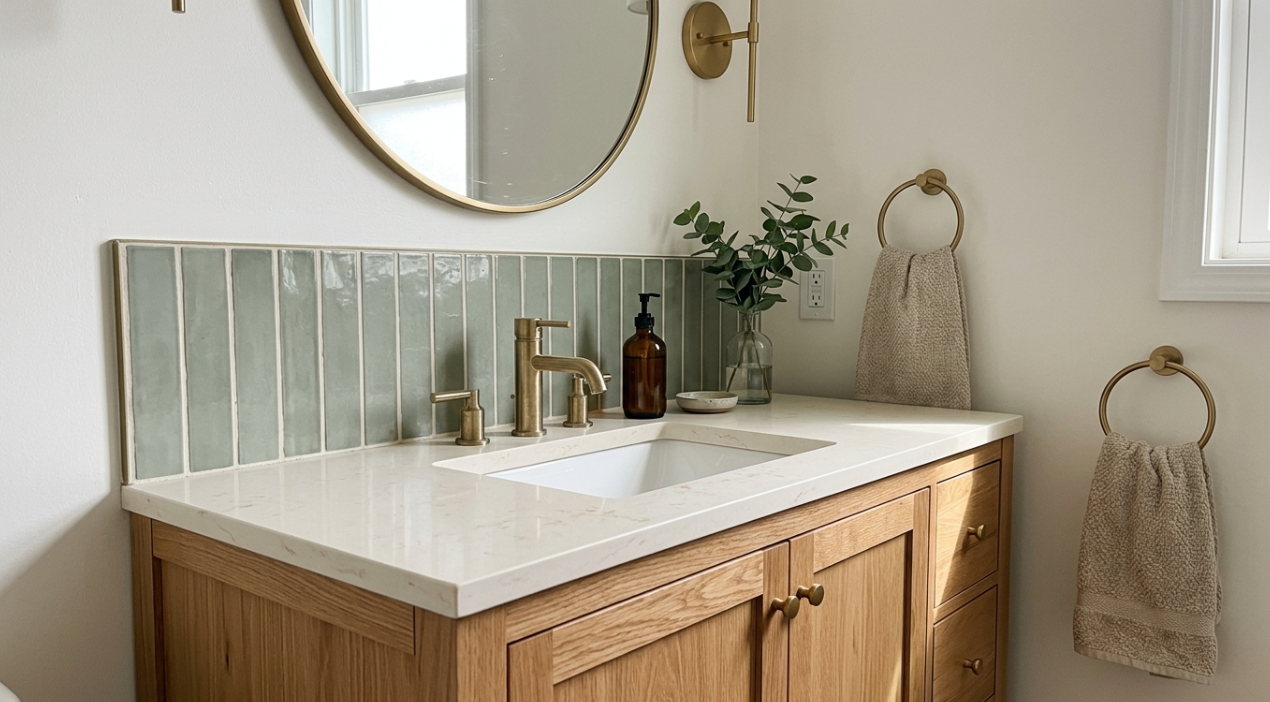
Bathroom Walls and Vanity Backsplashes
Walls offer more flexibility because they do not carry foot traffic. Ceramic, porcelain, glass, and decorative tiles can all work well when specified for the location. Glossy surfaces can reflect light in a small bathroom, while matte and textured finishes create a softer appearance.
Feature Walls and Niches
Use feature areas to introduce a contrasting color, shape, texture, or material without covering the entire bathroom in a high-maintenance finish. Zellige, mosaics, natural stone, and sculpted tiles can all be options, provided they are suitable for the intended exposure and are installed with compatible materials.
A Simple Selection Checklist
Before ordering, confirm these five things:
Location: Is the tile rated for the intended floor, wall, or shower application?
Water exposure: Is the product suitable for the moisture conditions?
Traction: Is the surface appropriate for the expected wet-floor conditions?
Maintenance: Does the finish or material require sealing or specialized cleaning?
Installation: Does the tile require a particular substrate, adhesive, grout, or waterproofing system?
When in doubt, ask the tile supplier or manufacturer to confirm suitability for your exact application in writing.
Quick Decision Rules
These are the practical shortcuts that save time and prevent regret:
Floor tile can go on walls. Wall tile cannot go on floors. Floor tiles are engineered for durability and weight; wall tiles aren’t.
Shower floors need DCOF of 0.42 minimum. Aim for 0.60+ for real-world safety on wet, soapy surfaces.
Porcelain for wet zones. Ceramic is fine for walls. The absorption difference matters when water is constant.
Natural stone requires sealing every 6 to 12 months in bathrooms. If that maintenance commitment sounds excessive, choose porcelain with a stone look instead.
Order 10 to 15% more tile than your measurements require. Lot variation means replacement tiles from a different production run may not match.
Matte for floors, glossy for accent walls. Glossy tile on a bathroom floor is a slip risk. On walls, it’s easy to clean and reflects light.
Test samples in your actual bathroom. Interior designers consistently recommend viewing tile under your bathroom’s real lighting conditions, morning through night. Overhead lights with warm bulbs can completely shift how a cool-toned tile appears.
Skip the bold statement tile. Design experts warn that dramatic patterned tile looks amazing on Instagram but leads to quick fatigue. As one designer put it, clients get tired of it fast, and swapping tile means demo, waterproofing, and a complete re-tile. If you want pattern, limit it to the shower niche or a single accent wall.
Dark tiles and all-white tiles both show everything. Dark, glossy tiles reveal every water spot, dust particle, and cleaning streak. Stark white shows dirt fast and can make a bathroom feel sterile. Warm neutrals, the beiges, soft taupes, and creamy whites trending in 2026, split the difference nicely.
2026 Bathroom Tile Trends
Trends come and go, but understanding what’s current helps you make choices you won’t regret in five years.
Warm neutrals are replacing cool grays. The gray-on-gray palette that dominated the 2010s has given way to warmer tones: beige, taupe, warm gray, and creamy white. These colors feel more inviting in bathroom spaces that tend toward cold and clinical.
Textured tiles are a defining feature of 2026. Fluted, ribbed, and three-dimensional surfaces are replacing flat, uniform tile. The appeal is both visual and practical: textured surfaces add depth and warmth while also improving grip.
Large-format porcelain continues to gain ground. Fewer grout lines create a sleek, spa-like feel. Stone-look porcelain in 24×48 formats is particularly popular for shower walls.
Checkerboard floors are back. Black-and-white or two-tone floor patterns have cycled back into fashion, particularly in vintage-inspired and eclectic bathrooms.
Matte finishes dominate. Gloss still appears in small doses for contrast, but the default in modern bathrooms has shifted firmly toward matte and satin surfaces that resist fingerprints and watermarks.
If you’re tiling as part of a larger project, our waterproof kitchen flooring guide covers how these same water-resistance principles apply to kitchen spaces.
How Much Bathroom Tile Should You Buy?
Measure each surface you plan to tile and calculate its area before requesting a quote. For a rectangular floor or wall, multiply the length by the height or width. Subtract large openings only when appropriate for your estimate, and calculate shower walls, niches, and other surfaces separately.
Basic formula:
Tile area required = Surface length × Surface width
Then add an allowance for cuts, breakage, and the complexity of the layout.
Project Type | Suggested Starting Allowance |
|---|---|
Simple straight layout | 10% extra |
Diagonal or more complex layout | 15% extra |
Herringbone, intricate patterns, or irregular spaces | 15% or more, depending on the layout |
These percentages are planning estimates, not universal requirements. The amount needed depends on tile dimensions, the room layout, the number of cuts, and whether matching replacement tile will be available later.
Before ordering:
Confirm the supplier’s actual coverage per box.
Round up to complete boxes.
Order from the same production lot when possible.
Keep spare tiles for future repairs.
Ask your installer to verify the quantity using the proposed layout before finalizing the order.
Cost Benchmarks (2026)
These ranges cover materials only, followed by fully installed costs. Actual pricing varies by region, tile complexity, and installer rates.
Tile Type | Materials per Sq Ft | Installed per Sq Ft |
|---|---|---|
Ceramic | $2 to $8 | $10 to $20 |
Porcelain | $4 to $12 | $15 to $30 |
Natural Stone | $8 to $25 | $20 to $45 |
Marble | $10 to $30 | $25 to $50 |
Glass (mosaic) | $7 to $25 | $20 to $40 |
Cement | $10 to $30 | $20 to $45 |
Labor alone typically runs $5 to $15 per square foot for straightforward installations. Complex patterns like herringbone or diagonal layouts can push labor to $20 per square foot or more.
Total project cost: A tile-only bathroom renovation averages $4,000 to $12,000 depending on scope. For a standard 100-square-foot bathroom with floor and wall tiles, expect $5,000 to $8,000 for materials and labor combined.
For readers comparing tile against non-tile flooring alternatives, our SPC flooring guide explains rigid core vinyl as a budget-friendly, waterproof option.
Frequently Asked Questions
What is the best tile material for a bathroom shower floor?
Porcelain mosaic tile is the strongest choice for shower floors. Porcelain absorbs less than 0.5% of water (impervious classification), and mosaic format provides extra grout lines for traction. Look for a DCOF of 0.60 or higher for optimal slip resistance.
Can I use wall tile on a bathroom floor?
No. Wall tiles are thinner, less durable, and lack the slip resistance needed for floor applications. Using wall tile on a floor leads to cracking, grout failure, and shifting tiles. Floor tile can always be used on walls, but the reverse doesn’t work.
How often does natural stone tile need to be sealed in a bathroom?
In bathrooms and shower areas, natural stone should be resealed every 6 to 12 months due to the constant humidity. Marble, travertine, and limestone are especially porous and benefit most from regular sealing.
What does DCOF mean on a tile spec sheet?
DCOF stands for Dynamic Coefficient of Friction. It measures how much traction a tile surface provides when wet. For wet interior floors, the ANSI standard requires a minimum DCOF of 0.42. Shower floors should aim for 0.60 or higher.
What PEI rating do I need for bathroom floor tile?
PEI 3 or higher is recommended for residential bathroom floors. PEI 0 and PEI 1 tiles are suitable only for walls. The rating measures abrasion resistance, not quality, so choose the rating that matches your traffic level.
Why should I order extra tile beyond my measured square footage?
Tiles from different production runs can have subtle color differences (lot variation). Ordering 10 to 15% extra from the same lot covers cuts, breakage during installation, and future repairs. Running short later could mean mismatched tiles if the manufacturer has moved to a new batch.
Is large-format tile a good choice for small bathrooms?
Yes, and often a great choice. Fewer grout lines make a small space feel more open and cohesive. The key requirement is a perfectly level substrate, since large tiles amplify any unevenness in the floor or wall. Professional installation is strongly recommended.
What tile finish is safest for bathroom floors?
Matte and textured finishes provide the best slip resistance for bathroom floors. Glossy or polished finishes look beautiful on walls but become dangerously slippery when wet. For any floor surface, check the DCOF rating rather than relying on how the finish feels to the touch.
Planning a bathroom remodel in Washington State? Krafter’s Land showrooms in Tukwila, Tacoma, Lynnwood, and Spokane carry porcelain tile, shower doors, vanities, and countertops. Start with our bathroom remodel checklist to map out your full project, then visit a showroom to see samples in person.