TLDR
SPC (stone plastic composite) is a rigid core vinyl plank that falls under the broader LVP (luxury vinyl plank) category. When shoppers compare SPC vs LVP flooring, they usually mean rigid core SPC versus traditional flexible vinyl plank. SPC wins on dent resistance, dimensional stability, and thermal stability for high traffic spaces, while flexible LVP wins on comfort, warmth, and quieter footsteps for bedrooms and living areas.
If you are comparing SPC vs LVP flooring, the first thing to know is that the two terms are not perfectly parallel. LVP means luxury vinyl plank, a format category. SPC means stone plastic composite (or stone polymer composite), which describes a specific core construction used inside many modern LVP products. The Resilient Floor Covering Institute classifies SPC as one of the rigid core constructions within the broader luxury vinyl and resilient flooring universe, alongside WPC (wood plastic composite).
So when most people search “SPC vs LVP,” they really mean: should I buy a rigid SPC core vinyl plank, or a traditional flexible vinyl plank? That is the comparison this guide answers.
Short answer: Choose SPC when dent resistance and stability matter most. Choose flexible LVP or WPC when comfort, warmth, and noise reduction are priorities.
Contact Krafter’s Land to compare flooring samples and request project quotes at any Washington showroom.
SPC vs LVP Flooring: Quick Answer
If you’re deciding between SPC and LVP flooring, the choice comes down to the flooring core.
Choose SPC flooring if you need maximum dent resistance, dimensional stability, and durability in kitchens, entryways, rentals, or commercial spaces.
Choose traditional flexible LVP if comfort, warmth, quieter footsteps, and a softer feel matter more than extreme rigidity.
Remember that SPC is actually a type of LVP, not a competing flooring category.
For most homeowners:
| If You Want… | Choose |
|---|---|
| Heavy furniture | SPC |
| Kids and pets | SPC |
| Bedroom comfort | Flexible LVP |
| Quiet flooring | Flexible LVP or WPC |
| Basement | SPC |
| Rental property | SPC |
| Living room | Flexible LVP |
SPC vs LVP Flooring: Quick Definitions
LVP (luxury vinyl plank) is a vinyl floor in plank format, usually designed to look like hardwood. LVP can have a flexible PVC core, a WPC core, an SPC core, or another multilayer construction. It is a category, not a single product type.
SPC (stone plastic composite) is a rigid core construction. The core uses a dense blend of limestone or mineral filler, PVC polymer, and stabilizers. SPC planks are stiffer and heavier than traditional flexible vinyl. They are designed for dimensional stability and dent resistance.
In common shopping language, SPC vs LVP flooring compares SPC rigid core vinyl plank against traditional flexible vinyl plank. Once you understand that distinction, the performance tradeoffs become clear.
Krafter’s Land carries LSPC flooring that builds on SPC technology. You can explore the LSPC series for more detail on how these products are constructed.
Quick Comparison Table
| Factor | SPC Rigid Core Vinyl Plank | Traditional Flexible LVP |
|---|---|---|
| Core material | Dense stone/mineral polymer composite | Flexible PVC |
| Feel underfoot | Harder, firmer, sometimes colder | Softer, warmer, more forgiving |
| Dent resistance | Better under heavy furniture and traffic | More prone to dents and compression marks |
| Scratch resistance | Depends on wear layer and finish | Depends on wear layer and finish |
| Waterproofing | Plank is usually waterproof; installation still matters | Plank is usually waterproof; installation still matters |
| Sound | Can be louder without a quality attached pad | Typically quieter and softer |
| Thermal stability | Minimal expansion/contraction with temperature swings | More susceptible to dimensional shifts in heat |
| Subfloor tolerance | Still needs a flat substrate; rigid joints can break over voids | Also needs a smooth substrate; flexible products may telegraph bumps |
| Installation handling | Heavier, harder to cut, click edges can be brittle | Lighter, easier to cut and handle |
| Best use | Kitchens, rentals, high traffic, commercial spaces | Bedrooms, living rooms, comfort focused spaces |
| Main risk | Brittle click joints, hard feel, noise | Denting, telegraphing, less dimensional stability |
Who Should Choose SPC Flooring vs LVP?
Understanding the SPC vs LVP flooring tradeoffs starts with knowing how each product fits your specific situation. SPC flooring is usually the better option if you:
- Have large dogs
- Move furniture often
- Want maximum dent resistance
- Install flooring in kitchens
- Need flooring for rental properties
- Install over concrete slabs
- Want commercial grade durability
- Live in a climate with wide temperature swings
Traditional flexible LVP is usually better if you:
- Walk barefoot frequently
- Want warmer flooring
- Prioritize quieter footsteps
- Install flooring upstairs
- Want easier DIY installation
- Prefer more cushioning
The Biggest Difference Is the Core
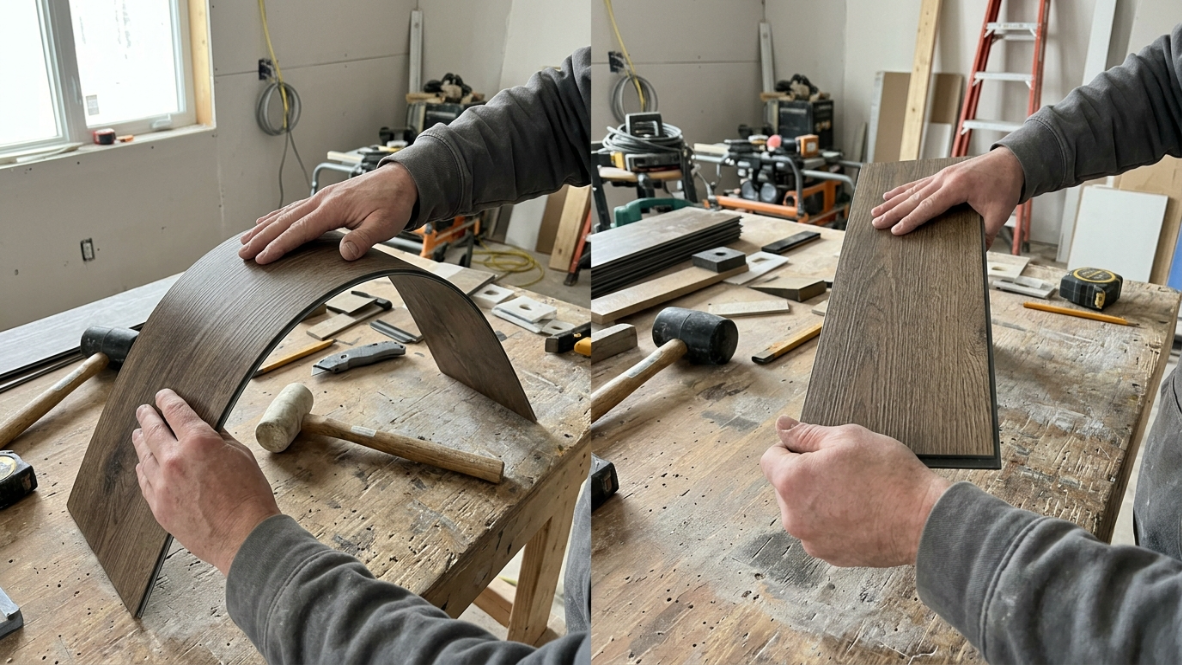
The decorative top of an SPC plank and a flexible LVP plank can look identical. Same wood grain print, same texture. The core underneath is what changes everything about how the floor performs.
SPC’s rigid mineral filled core is denser and stiffer. That stiffness improves dent resistance and dimensional stability, making SPC popular for kitchens, entries, and rental properties. But it also makes the floor harder, colder, and potentially louder underfoot.
Flexible LVP has a traditional PVC core that bends and gives. It feels warmer and quieter, which is why many homeowners prefer it for bedrooms, living rooms, and upper floors in multi story homes.
There is also WPC, which sits between the two. WPC cores use a foamed polymer that is lighter and softer than SPC but more rigid than traditional flexible vinyl. A flooring sales rep on Reddit described the evolution this way: flexible vinyl LVP came first, then WPC, then SPC/rigid core. The rep noted that WPC is softer and warmer but easier to dent, while SPC is denser and more stable but harder and colder underfoot.
For a deeper look at how SPC core construction works, see the guide on what SPC flooring is.
Quick Core Glossary
- SPC: Solid/stone polymer core. Rigid, dense, heavy.
- WPC: Expanded/wood polymer core. Lighter, thicker, softer than SPC.
- Flexible LVP: Traditional PVC core plank. Thin and flexible.
- LVT: Luxury vinyl tile. Tile format, or sometimes used as a broader category name.
- Rigid core/EVP: Marketing terms for multilayer rigid vinyl products.
Thermal Stability and Climate Performance
This is one of the most practical differences in the SPC vs LVP flooring debate, and most comparison articles gloss over it.
SPC’s limestone filled core gives it a very low coefficient of thermal expansion. That means it barely expands or contracts when room temperatures change. According to manufacturer technical data, SPC products typically show dimensional change of less than 0.1% across a wide temperature range. This matters in sunrooms, rooms with large south facing windows, basements that fluctuate seasonally, and homes with inconsistent HVAC.
Flexible LVP, by contrast, is more sensitive to temperature. Traditional PVC cores can soften in heat and stiffen in cold. In rooms that regularly swing between 60°F and 85°F (or more in direct sunlight), flexible vinyl planks are more likely to expand, gap, or buckle at the edges. Practitioners on Reddit report seeing flexible LVP planks pull away from walls or tent in the middle of rooms that get heavy afternoon sun.
Underfloor Heating Compatibility
Both SPC and flexible LVP can work over radiant heat systems, but with important limits. Most manufacturers cap the surface temperature at 80°F to 85°F. SPC handles this better because of its thermal stability; the rigid core does not soften or warp at moderate radiant heat temperatures the way some flexible PVC products can.
Before installing over any underfloor heating system, check two things: the flooring manufacturer’s maximum surface temperature rating, and whether the heating system can be controlled precisely enough to stay within that limit. Hydronic (water based) radiant systems are generally easier to control than electric mat systems, which can create hot spots.
One contractor in a flooring forum noted that SPC over radiant heat works well as long as the system has been running for at least two weeks before installation to stabilize slab moisture and temperature. Skipping that step leads to expansion issues in the first season.
Humidity and Moisture Performance
SPC’s mineral core does not absorb water and does not swell in humid conditions. This makes it a strong pick for the Pacific Northwest, Gulf Coast states, or any region with seasonal humidity swings. Flexible LVP also resists water at the plank level, but its PVC core is slightly more affected by sustained humidity changes, which can show up as minor dimensional drift over time.
For basements and slab on grade installations where moisture vapor transmission is a concern, SPC is the safer default. But neither product eliminates the need for proper moisture testing before installation. Manufacturers commonly require a calcium chloride or relative humidity test on concrete slabs.
SPC Flooring Pros and Cons
Pros
- Excellent dent resistance
- Highly stable in changing temperatures and humidity
- Waterproof core
- Handles heavy furniture well
- Ideal for busy households
- Commercial grade options available
- Compatible with radiant heat (within manufacturer limits)
Cons
- Harder underfoot
- Can feel colder
- Louder without attached pad
- Brittle click lock edges
- Harder to cut during installation
Flexible LVP Pros and Cons
Pros
- Softer feel
- Warmer surface
- Quieter footsteps
- Easier DIY installation
- Easier to cut
Cons
- More prone to dents
- Less dimensionally stable in temperature swings
- Can telegraph subfloor imperfections
- Not ideal for very heavy furniture
- More sensitive to direct sunlight and radiant heat
Durability: Dents, Scratches, and What Wear Layer Actually Means
SPC generally wins on dent resistance. The dense rigid core does not compress easily under furniture legs, rolling chairs, or appliance weight. This makes SPC a strong pick for kitchens, entries, and rental turnovers.
Scratch resistance is a different story. Scratches happen at the surface, which means the wear layer and finish matter more than the core type. Shaw explains that wear layers are measured in mils (thousandths of an inch) and commonly come in 6, 12, or 20 mil, with thicker layers offering tougher surface protection.
Here is the part most SPC vs LVP flooring comparisons miss: a 20 mil wear layer does not mean the whole floor is structurally strong. A Protex Flooring industry post on LinkedIn argues that many buyers over focus on wear layer thickness, when structural strength actually depends on core thickness, density, formulation, and balanced construction. The wear layer protects against surface abrasion. It does not make the locking system stronger.
For a practical example of how thickness specs affect real world performance, see the SPC flooring thickness guide.
Mil vs MM: Do Not Confuse Them
This trips up a lot of shoppers. Mil measures the wear layer (surface protection). Millimeters (mm) measure total plank thickness (the whole product including core and attached pad). A 20 mil wear layer is about 0.5 mm. A 6 mm plank is 6,000 mils thick. These numbers describe completely different parts of the product, and comparing them directly makes no sense.
Comfort and Sound
SPC is the “work boot” of vinyl plank. Flexible LVP or WPC is the “sneaker.” One handles load better. The other is easier on your feet.
SPC feels harder because it is denser and less flexible. In a Reddit thread asking why SPC gets so much criticism, common complaints included cold feel underfoot, louder footsteps, and a plasticky sound when walking. Some users were happy with their SPC floors after years of use, but they tended to be the ones who installed SPC in kitchens and entries, not bedrooms.
Flexible LVP and WPC products typically feel warmer and produce less impact noise. For multi story homes, upstairs bedrooms, playrooms, or apartments where sound transfer matters, this difference is meaningful.
An attached IXPE or cork pad can improve SPC’s comfort and acoustics, but only if it comes factory attached or is specifically approved by the manufacturer. Adding extra soft padding on your own often creates problems, which the installation section below explains.
Waterproofing: What It Actually Means
Both SPC and flexible LVP are commonly marketed as waterproof. The plank material resists water, and the core will not swell like hardwood or laminate. This is true and useful.
But a waterproof plank is not the same as a waterproof room. Water can still enter through seams, run under the perimeter, reach the subfloor, or get trapped between the floor and a concrete slab. One SPC manufacturer’s installation guide specifically warns that SPC resists water damage but does not prevent moisture transmission, and that moisture collecting on either side of the floor can create mold and mildew concerns.
Treat waterproof vinyl plank as spill resistant flooring, not as waterproofing for the building. Kitchens, bathrooms, laundry rooms, and basements still require correct transitions, expansion gaps, and proper moisture management. For kitchen specific options, the waterproof kitchen flooring guide covers material choices in more detail.
Installation: Where SPC and LVP Flooring Actually Fail
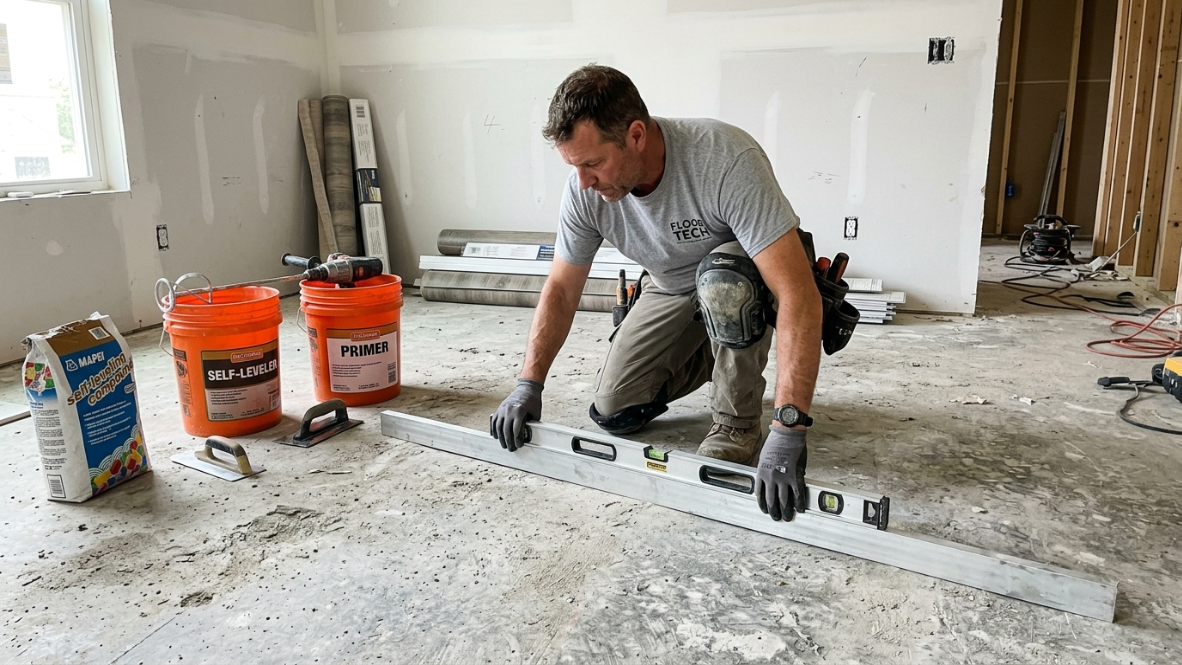
This is where most SPC vs LVP flooring articles fall short. They say SPC is “more forgiving” over imperfect subfloors. That claim needs a serious reality check.
Subfloor Flatness Is Not Optional
Both SPC and flexible LVP need a flat, solid substrate. Manufacturer installation guides commonly require uneven areas greater than 3/16 inch in 10 feet to be leveled before installation. SPC’s rigid core may bridge very minor imperfections better than soft flexible vinyl, but it cannot float over a wavy floor without consequences.
Practitioners on the Flooring Forum identified lack of substrate flatness as a leading cause of click floor failures. One professional noted that small locking joints on thin plastic planks can be destroyed by flexing over low spots. The failure mode goes like this: a low spot sits under the plank, foot traffic flexes the plank downward, the click edge carries stress, the joint opens or breaks, a gap appears, and repair requires removing and replacing planks.
SPC Is Rigid, Not Indestructible
The National Floor Covering Association of Canada published a warning that SPC is “simultaneously strong, fragile and not as forgiving as LVT or laminate” during installation. The reason: SPC joints are thin and brittle. The core can resist dents while the locking edge remains vulnerable.
Reddit installers echo this point. In discussions about SPC complaints, users and contractors repeatedly flag thin SPC products, hollow spots under planks, and uneven subfloors as causes of broken locking mechanisms and gaps. The best SPC on a bad subfloor can fail faster than a mid grade floor installed correctly.
Large Area Installation and Transition Planning
For open floor plans and large rooms, both SPC and flexible LVP need transition strips at doorways and expansion breaks in long runs. Most manufacturers require a transition strip every 30 to 40 feet of continuous run (some specify even less). Without these breaks, temperature driven expansion, even the small amounts SPC produces, accumulates across a large area and can cause buckling or lifted edges.
Flexible LVP is more forgiving in large area installs because the material itself absorbs some movement. SPC is stiffer, so accumulated expansion stress concentrates at the weakest point, which is usually the last row near a wall or a doorway without a transition.
Contractors who install across multiple rooms report that skipping transitions to create a seamless look is the single biggest cause of warranty claims on floating floors. The visual payoff is not worth the callback risk. Plan transitions at every doorway and at manufacturer specified intervals, no exceptions.
Do Not Add Underlayment as a Shortcut
A flooring contractor’s post on LinkedIn warns that adding foam padding under LVP does not level a floor, does not fix low spots, creates more movement, and can void warranties when the product already has factory attached IXPE backing. Reddit installation discussions carry the same warning. If you need acoustic performance, use underlayment approved by the flooring manufacturer, not whatever foam is cheapest at the store.
Sound control should be designed, not improvised.
Cost: Material Price, Installed Price, and Total Cost of Ownership
Cost Per Square Foot
SPC often costs slightly more per square foot than basic flexible LVP. But the installed price can swing dramatically depending on subfloor leveling, old floor removal, transitions, baseboards, stairs, furniture moving, and local labor rates.
According to HomeAdvisor, many LVT installation projects fall around $3 to $10 per square foot for materials, with floating floors listed around $4.50 to $8 per square foot and professional labor around $2.50 to $6 per square foot.
Angi’s 2026 vinyl flooring cost guide reports that homeowners spend around $1,009 to $4,115 on average, with upgraded LVP, LVT, or waterproof vinyl increasing material costs by up to $12 per square foot.
The cheapest plank is not always the cheapest floor. For contractors, callbacks on thin or low quality material can erase the margin saved on box price. A flooring industry post on LinkedIn argued that weak locking systems create more than installation frustration: they slow the job, increase breakage, trigger installer complaints, cause project delays, and create warranty pressure that makes the product hard to sell with confidence.
Browse flooring options to compare product specs and request trade pricing.
Total Cost of Ownership
Material price per square foot is only the first number. The total cost of owning a floor over its useful life includes:
- Subfloor preparation: Leveling a concrete slab or plywood subfloor can add $1 to $3 per square foot. SPC’s rigidity makes proper prep even more critical because joint failures from bad subfloors mean tearing out and replacing sections.
- Underlayment: If the product does not include a factory attached pad and the project needs sound control, approved underlayment adds $0.25 to $1.50 per square foot.
- Transition strips and trim: Large area installs and multi room projects need more transitions and quarter round. Budget $2 to $5 per linear foot.
- Repair and replacement costs: SPC’s click lock system means that repairing a damaged plank in the middle of a room often requires disassembling rows back to the wall. Flexible glue down LVP can sometimes be individually replaced, but floating click products generally cannot.
- Longevity: A well installed SPC floor with a 20 mil wear layer in a residential setting can realistically last 15 to 25 years. Flexible LVP with the same wear layer may show denting and compression marks sooner in high traffic areas, potentially requiring replacement 5 to 10 years earlier in demanding environments.
When you calculate cost per year of useful life, SPC often comes out ahead in kitchens, rentals, and commercial spaces despite the higher upfront material cost. Flexible LVP wins on total cost of ownership in low traffic bedrooms and guest rooms where denting is not a concern and the lower upfront cost delivers good value over a 15 year life.
Lifespan Expectations: How Long Each Floor Actually Lasts
Manufacturer warranties give one picture. Real world lifespans give another.
SPC flooring with a quality core (5.5 mm or thicker), a 20 mil wear layer, and proper installation typically lasts 15 to 25 years in residential use. In light commercial settings, expect 10 to 15 years depending on traffic volume and maintenance. The core itself does not degrade, but the wear layer eventually thins, the finish dulls, and the printed design layer can show wear patterns in high traffic lanes.
Flexible LVP with a comparable wear layer can last 10 to 20 years in residential settings. The shorter end applies to homes with heavy furniture, large pets, or rooms that see significant traffic. Denting and compression marks shorten the visual life of flexible LVP even when the wear layer itself still has protection left.
Several factors shorten the lifespan of either product:
- Subfloor problems that were not addressed before installation
- Direct sunlight without UV protection (window treatments or low E glass)
- Dragging heavy objects without protective pads
- Harsh cleaning chemicals that strip the finish
- Moisture trapped under the floor from vapor drive or plumbing leaks
Practitioners on Reddit report that cheap SPC (under 4 mm total thickness) can start showing click joint failures within 2 to 3 years, which effectively ends the floor’s useful life even though the surface still looks fine. Spending a bit more on a thicker, better engineered product pays for itself many times over in avoided replacement costs.
SPC vs LVP vs Laminate Flooring
| Feature | SPC | Flexible LVP | Laminate |
|---|---|---|---|
| Waterproof | Yes | Yes | Usually No |
| Dent Resistance | Excellent | Good | Good |
| Comfort | Moderate | Excellent | Moderate |
| Sound | Moderate | Good | Moderate |
| Scratch Resistance | Depends on wear layer | Depends on wear layer | Excellent |
| Pet Friendly | Excellent | Excellent | Good |
| DIY Friendly | Moderate | Easy | Moderate |
| Radiant Heat Compatible | Yes (with limits) | Limited | Some products |
| Typical Lifespan | 15 to 25 years | 10 to 20 years | 10 to 20 years |
Which Should You Choose? SPC vs LVP Flooring by Room and Project
| Situation | Better Default | Why |
|---|---|---|
| Busy kitchen | SPC or high spec rigid LVP | Dent resistance, moisture exposure, heavy foot traffic |
| Bathroom or laundry | SPC or waterproof rated LVP with correct install | Plank resists water, but seams and transitions still matter |
| Basement over concrete | SPC or approved rigid core product | Dimensional stability; check moisture and vapor requirements |
| Bedroom | Flexible LVP or WPC | Softer, warmer, quieter |
| Playroom | Flexible LVP or WPC | Comfort and noise matter more than dent resistance |
| Rental property | SPC with strong wear layer and locking system | Durability and tenant turnover resistance |
| Home gym | SPC (use mats under equipment) | Better dent resistance, but heavy loads still need protection |
| Multifamily corridor | Commercial rated SPC or LVT | Wear layer, acoustic ratings, warranty, code requirements |
| Room with radiant heat | SPC (verify manufacturer temp limit) | Better thermal stability at controlled surface temperatures |
| Sunroom or south facing room | SPC | Minimal expansion/contraction from temperature swings |
| DIY install | Flexible LVP may be easier | SPC is rigid and click edges can be brittle for beginners |
Rigid core vinyl is not a niche product anymore. FCNews reported that rigid core products accounted for nearly 58% of all resilient flooring sales in 2025 and about 70% of all LVT sales. This is now the dominant construction in the category.
SPC vs Flexible LVP Specifications at a Glance
| Specification | SPC Flooring | Flexible LVP |
|---|---|---|
| Core | Stone polymer composite | Flexible PVC |
| Rigidity | Very High | Low |
| Typical Thickness | 4 to 8 mm | 2 to 5 mm |
| Wear Layer | 6 to 30 mil | 6 to 30 mil |
| Weight | Heavier | Lighter |
| Comfort | Moderate | High |
| Noise Reduction | Moderate | Better |
| Dent Resistance | Excellent | Good |
| Thermal Stability | Excellent | Moderate |
| Radiant Heat | Compatible (with limits) | Limited compatibility |
| DIY Installation | Moderate | Easier |
| Typical Cost | Moderate to High | Budget to Premium |
| Expected Lifespan | 15 to 25 years | 10 to 20 years |
Spec Checklist Before Buying SPC or LVP Flooring
Whether you are a homeowner, contractor, dealer, or designer, ask these questions before committing to a product. Getting the SPC vs LVP flooring decision right starts with verifying the specs that actually matter.
- What is the core? Flexible PVC, WPC, SPC, or a hybrid construction?
- What is the total thickness in mm? Do not confuse total thickness with wear layer. The thickness guide breaks down what different mm specs mean in practice.
- What is the wear layer in mil? Common options are 6, 12, and 20 mil. For busy homes, rentals, pets, kids, and light commercial use, 20 mil is a reasonable target.
- What locking system does it use? Practitioners on LinkedIn and flooring forums repeatedly flag locking system quality as the biggest jobsite and warranty variable.
- What subfloor flatness does the installation guide require? Many guides specify 3/16 inch in 10 feet, but always follow the exact product instructions.
- Is an attached pad included? If yes, do not add extra underlayment unless approved by the manufacturer.
- Does it require acclimation? Follow manufacturer instructions for jobsite temperature and humidity.
- Does it need a vapor barrier over concrete? Follow the installation guide and warranty language.
- What certifications does it carry? FloorScore certification covers indoor air quality for hard surface flooring. The RFCI’s ASSURE Certified program applies to rigid core WPC and SPC products, addressing indoor air quality, performance, heavy metals, and ortho phthalates.
- What voids the warranty? Common disqualifiers include bad subfloor prep, unapproved underlayment, moisture problems, missing expansion gaps, and installation in unapproved areas.
A flooring sales rep on Reddit advised shoppers to ask about the core, backing, wear layer, plank thickness, and wear layer thickness rather than relying on marketing names alone. That advice applies whether you are buying for your own home or recommending a product to a client.
What Homeowners Complain About After Installation
Knowing what goes wrong helps you avoid the same mistakes. Based on practitioner forums and Reddit discussions, the most common complaints about SPC vs LVP flooring products include:
- Cold, hard feel (SPC without a quality attached pad)
- Louder footsteps than expected (SPC on upper floors or over hollow subfloor areas)
- Cheap visual repetition (low cost products with few pattern variations)
- Broken click joints on thin or low quality products
- Gaps and separation from poor subfloor prep
- Buckling near windows from thermal expansion in flexible LVP without adequate transitions
- Disappointment when “waterproof” does not mean “floodproof”
Most of these trace back to product selection, subfloor prep, or installation mistakes rather than a fundamental flaw in the flooring category itself.
A Note for Contractors, Dealers, and Trade Buyers
For trade professionals evaluating SPC vs LVP flooring to stock or recommend, the decision goes beyond homeowner comfort. Consider:
- Locking system quality affects jobsite speed, breakage rates, callbacks, and installer willingness to work with the product again.
- Warranty conditions vary by product. Know what voids coverage before recommending it.
- Subfloor prep scope should be scoped and priced in the estimate, not discovered mid install.
- Installed cost, not box price, is what determines project profitability.
- Total cost of ownership matters for repeat clients and property managers who care about lifecycle value.
- Certifications matter for commercial, multifamily, and IAQ sensitive projects.
If you are coordinating flooring alongside cabinets, countertops, and tile, working with a multi category supplier can reduce vendor management. Krafter’s Land supplies flooring, cabinets, quartz countertops, tile, and other remodeling products through authorized retailers and licensed contractors across Washington.
Register as a trade partner for dealer and contractor purchasing.
When planning a full kitchen or bath remodel, flooring selection often happens alongside countertop and cabinet decisions. For countertop guidance, compare quartz vs granite to understand material tradeoffs. Trade pros sourcing multiple categories can also review the cabinet supplier guide for contractors and dealers.
SPC vs LVP Flooring Decision Guide
| Question | Recommendation |
|---|---|
| Is this a kitchen? | SPC |
| Is this a bedroom? | Flexible LVP |
| Is comfort the priority? | Flexible LVP |
| Is durability the priority? | SPC |
| Is the floor over concrete? | SPC |
| Is this a rental? | SPC |
| Is sound reduction important? | Flexible LVP |
| Is heavy furniture involved? | SPC |
| Does the room get direct sunlight? | SPC |
| Is radiant heat installed? | SPC (check temp limits) |
| Is this a large open floor plan? | SPC (with planned transitions) |
Frequently Asked Questions
Is SPC better than LVP?
SPC is better when you need dent resistance, rigidity, and high traffic durability. Traditional flexible LVP is better when comfort, warmth, and quieter footsteps are priorities. Since SPC is often a type of LVP, the better question is whether you want a rigid SPC core or a more flexible vinyl plank core.
Is SPC a type of LVP?
Yes, in most cases. Industry groups classify SPC as one of the rigid core constructions within the luxury vinyl and resilient flooring category. When people compare SPC vs LVP flooring, they are usually comparing core types within the same product family.
Which is better for kitchens, SPC or LVP?
SPC is usually the safer default for kitchens. Kitchens see heavy foot traffic, dropped objects, appliance weight, spills, and frequent cleaning. SPC’s dent resistance gives it an edge in this room. A high quality flexible LVP or WPC can also work, but the rigid core handles kitchen stress better.
Does SPC flooring feel cold?
It can. SPC’s dense rigid core does not insulate as well as softer WPC or flexible vinyl. Practitioners on Reddit frequently mention cold feel as a complaint, particularly in bedrooms or on concrete slabs. A quality attached pad helps, but SPC will still feel firmer than flexible alternatives.
Is 20 mil wear layer enough?
For most residential use, 20 mil is more than adequate. Industry sources describe 20 mil as suitable for commercial settings. But remember that wear layer only protects the surface from scratches and abrasion. It does not determine structural strength, locking joint quality, or dent resistance. Those depend on core thickness, density, and overall construction.
Can SPC go over uneven subfloors?
Not safely. SPC can bridge very minor imperfections better than flexible vinyl, but manufacturer guides commonly require subfloors to be flat within 3/16 inch over 10 feet. Rigid planks transfer stress to click joints when they flex over voids, which can cause joint failure and gaps.
Can SPC or LVP go over radiant heat?
Both can, but SPC is the better choice. Most manufacturers limit surface temperature to 80°F to 85°F. SPC handles moderate heat without softening or warping, while flexible LVP is more sensitive to sustained warmth. Always verify the specific product’s temperature rating before installing over any radiant system.
How long does SPC flooring last compared to flexible LVP?
A well installed SPC floor with a 20 mil wear layer typically lasts 15 to 25 years in residential settings. Flexible LVP with comparable specs can last 10 to 20 years, though it may show denting and compression marks sooner in high traffic areas. In both cases, proper installation and subfloor prep are the biggest factors in actual lifespan.
What is the difference between mil and mm in flooring?
Mil is one thousandth of an inch and measures the wear layer (surface protection). Millimeters measure total plank thickness (the entire product including core and pad). A 20 mil wear layer is about 0.5 mm, while a 6 mm plank is 6,000 mils thick. These are different measurements for different parts of the floor.
Should I add underlayment under SPC or LVP?
Only if the manufacturer’s installation guide allows it. Many SPC and LVP products come with factory attached IXPE or cork backing. Adding extra soft foam on top of that can create too much movement, stress the locking system, and void the warranty. If you need sound control or moisture protection, use only manufacturer approved underlayment.
What does SPC flooring cost per square foot compared to flexible LVP?
SPC material typically runs $3.50 to $8 per square foot for residential grades, while basic flexible LVP starts as low as $2 to $5 per square foot. But material cost alone is misleading. Once you factor in subfloor prep, transitions, labor, and the longer expected lifespan of SPC, the total cost of ownership gap narrows considerably, and in high traffic rooms SPC often costs less per year of useful life.
Dealers, contractors, and remodelers in Washington can compare SPC vs LVP flooring samples in person at Krafter’s Land showrooms in Tukwila, Tacoma, Lynnwood, and Spokane.
Browse product categories or request a quote to get started on your next flooring project.